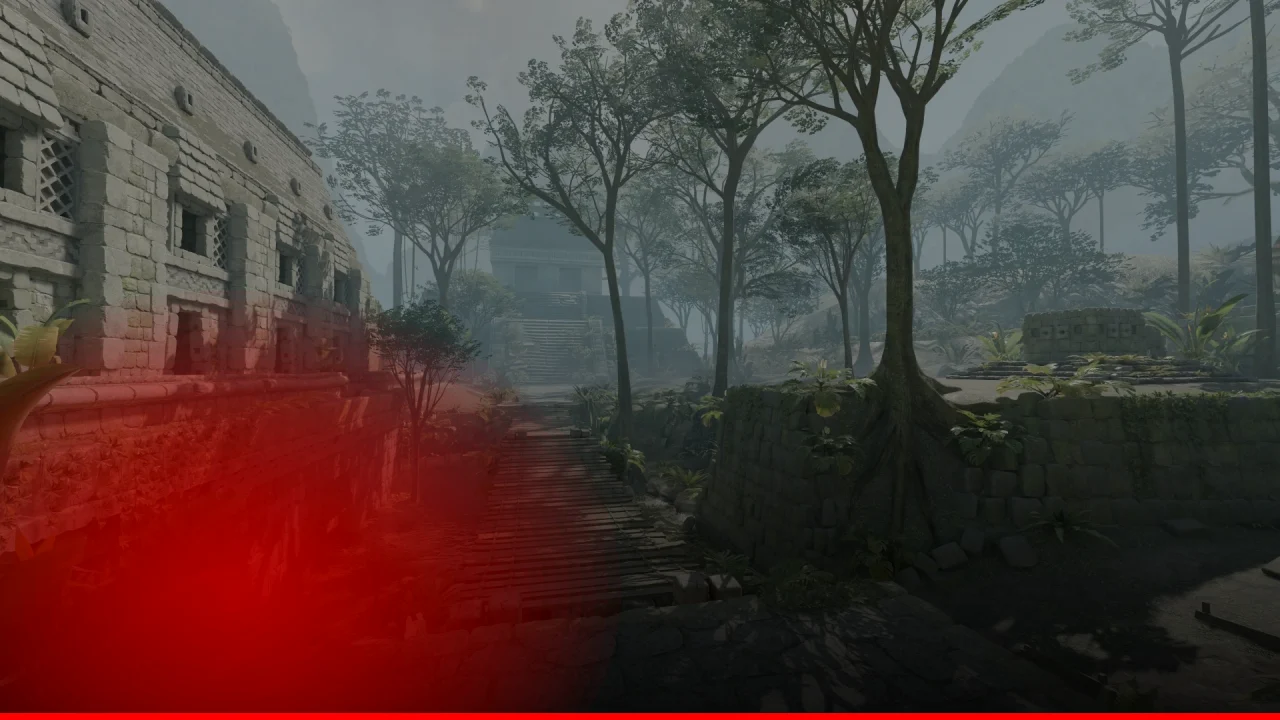
Ancient is one of the more distinctive maps in the CS2 active duty pool. Its jungle-temple aesthetic conceals a genuinely complex layout built around mid control, tight A-site angles, and a B site that rewards patient, coordinated play. Since its introduction to competitive rotation, Ancient has developed a well-defined metagame that favors teams with sharp utility usage and strong rotational awareness. This guide breaks down every key area: the A site ruins, B site cave and donut, mid control, and the key smokes that make executes land.
Map Overview: Why Ancient Is Unique
Ancient features two bombsites connected by a mid area that is both accessible and dangerous. Unlike Mirage, where mid control is nearly mandatory, Ancient mid is valuable but not strictly required for most executes. The map’s tight corridors and abundant cover create a lot of close-range duels, making it one of the better maps for riflers who excel at short-to-medium range fights. AWP angles exist but are somewhat constrained compared to maps like Dust 2 or Nuke.
The map is roughly T-shaped from T spawn: the main T routes head toward A main on the left and toward mid and B on the right. CT spawn feeds two CTs toward A site quickly and three players toward B or mid. This CT-favored rotation geometry means T-side must use coordinated executes rather than raw aggression.
A Site: Ruins, Temple, and CT Angles
A Main and the Pillar
A main is the wide corridor leading from T spawn into the A site area. The large stone pillar near the site entry is both cover and a key angle checkpoint. CTs will often play the pillar or the elbow beyond it to catch Ts who push too aggressively. A standard A execute involves smoking the CT position at the elbow and flashing over the pillar before rushing the site.
Temple
Temple refers to the elevated structure on the T side of A site. Holding temple gives Ts a slight elevation advantage and allows them to watch the site while waiting for smokes to bloom. A CT retaking from the spawn side must clear temple before committing to site, making it an excellent post-plant hold position. Place the bomb toward the back of site and anchor in temple to maximize trade potential during CT retakes.
CT Corner and Ruins
The ruins area on CT side of A provides multiple angles toward the site. CTs can play deep in ruins for an aggressive surprise hold, or hold back near their spawn entry for a safer default. Ts must clear ruins properly on any execute, as a lurking CT here will disrupt the plant and potentially kill the bomb-carrier from behind. A molotov thrown into ruins before the execute is a reliable counter.
A Site Execute
- Smoke the CT elbow at A main and the ruins entrance.
- Flash over the pillar to blind anyone on site.
- Three players push A main simultaneously; one player covers the ruins smoke.
- Clear temple and ruins before planting.
- Default plant is mid-site behind the cover box, with one player holding CT and one watching A main for the retake.
B Site: Cave, Donut, and the Tight Entry
Cave
Cave is the T-side route that approaches B site from the lower entrance. It is a narrow, dark corridor that can be difficult for CTs to hold aggressively. Ts who move through cave gain access to B-site entry quickly, but the tight angle at the cave mouth — where a CT can lurk with a shotgun or rifle — is a consistent kill spot. A flashbang around the corner before pushing cave is essential to any B execute.
Donut
Donut is the circular raised platform in the center of B site. Whoever controls donut controls the bombsite. A CT playing donut has sightlines in multiple directions and can contest both cave entries and the mid-to-B rotation. On T-side, getting a player onto donut early — before the CT has time to set up — fundamentally shifts B-site control. A boost from a teammate allows a T to hop onto donut from the cave side, catching the CT off-angle.
B Site CT Angles
CTs hold B from several positions: the B spawn-side entry, the corner behind the large stone structures, and occasionally from a sneaky boost above the cave entry. The challenge for CTs is that a coordinated T execute with proper smokes makes every one of these angles difficult to hold individually. Two CTs on B is the ideal default: one holding cave, one watching donut and the back of site.
B Site Execute
- Smoke the B CT entry and the corner above cave to block key sightlines.
- Flash deep into B site before entering cave.
- Two or three players push through cave; one player immediately jumps onto donut.
- Clear the CT-side corners before planting.
- Post-plant: hold B CT entry and the mid connector to prevent fast CT rotation.
Mid Control: The Strategic Pivot
Mid on Ancient connects T-side to the B-site area and provides access to a CT mid position that overlooks multiple angles. Taking mid control gives Ts information and map presence that pressures CTs to commit resources away from the bombsites. The key exchange happens at the mid doors: CTs often push mid aggressively in early rounds to deny T-side scouts from gathering information.
Mid to B
A T taking mid control can rotate into B site faster than a CT rotating from A. This speed asymmetry makes mid-to-B one of the most effective execute routes on Ancient. One smoke on mid CT, a flash through the opening, and two players moving from mid to B while two more come through cave creates a classic two-pronged take that stretches the CT defense past its breaking point.
Mid to A
Mid to A is longer and riskier, but can catch a CT team expecting a B push. A player who has gained mid control can cut through a side passage toward A CT side, appearing as a surprise lurk mid-execute. This play is most effective when the CT team has over-committed defenders to B following a convincing fake.
Key Smokes and Utility
| Smoke Target | Purpose | Common Lineup Source |
|---|---|---|
| A elbow / CT | Block CT angle on A execute | A main entry wall |
| Ruins entrance | Deny ruins hold during A exec | Near pillar, standing |
| B CT entry | Block CT backstab on B execute | Cave mouth |
| Mid CT | Enable safe mid crossing | T-side mid wall |
Eco and Retake Rounds
Ancient rewards disciplined eco strategy. On eco rounds, the B-site cave rush with pistols and SMGs is viable because the narrow corridors negate the range advantage of rifles. On retakes, CTs should prioritize getting one player onto donut before the bomb is planted — once a T holds donut post-plant, retaking B becomes extremely costly. For A retakes, a coordinated push from ruins and CT simultaneously splits the T post-plant hold effectively and prevents them from trading cleanly.
«Ancient is a map where patience wins. Teams that rush individual duels before utility lands lose consistently.»
Common Mistakes on Ancient
- Neglecting donut on B: A CT who cedes donut control early almost always loses the B site.
- Pushing A main without smoking the elbow: The CT elbow angle is one of the most punishing first-peek positions on the map.
- Ignoring mid pressure: Even if you do not plan a mid execute, denying T-side mid scouts is important every round.
- Poor post-plant positioning: Stacking on one angle post-plant on Ancient is a mistake — CT retakes frequently come from multiple directions at once.
Advanced Concepts
At higher levels, Ancient mid becomes a genuine battle for round control. Professional teams frequently send aggressive CT mid pushes in the opening seconds to cut off T-side scouts and force the T team to react rather than execute their prepared setup. Learning to counter these early CT pushes — with a coordinated T-side mid hold or a fast B push enabled by the CT mid player being out of position — separates good Ancient teams from great ones.
Lurk plays are also particularly effective on Ancient. The map’s longer rotation paths mean a T lurker who gets behind the CT team can cause devastating chaos at exactly the wrong moment for the defense. A lurk through mid, timed to coincide with an A execute, is a classic Ancient technique seen regularly in professional matches.
For the full interactive callout map and layout diagram, see the CS2 Ancient map page. To compare Ancient’s strategic identity to the rest of the pool, visit the CS2 maps overview.
Conclusion
Ancient is a map that heavily rewards preparation and punishes impulsiveness. Knowing the donut, understanding cave timing, and mastering mid control are the three pillars of Ancient competence. Players who invest time in the map’s utility lineups and rotation patterns will find that Ancient becomes one of the most rewarding maps in the active duty pool to play and master.
Comments