North American esports has a recurring headache that won’t go away, and ESL FACEIT Group’s top esports executive isn’t sugarcoating it. Ulrich Schulze, the organisation’s Senior Vice President of Esports, told attendees at Global Esports Industry Week in Cologne that visa problems have been a constant drag on the region for years. “I think Visas have always been a topic for North America,” he said, pointing to a structural issue that keeps disrupting team travel and event planning.
Schulze’s remarks came during a wider discussion about how EFG tailors its tournament portfolio to different markets. While IEM Cologne has grown into a flagship Counter-Strike event with a devoted following, he stressed that copying that blueprint everywhere would be a mistake. The real goal, he explained, is creating something that clicks with local audiences rather than churning out identical experiences.
How IEM Cologne became a staple and what other events learn from it
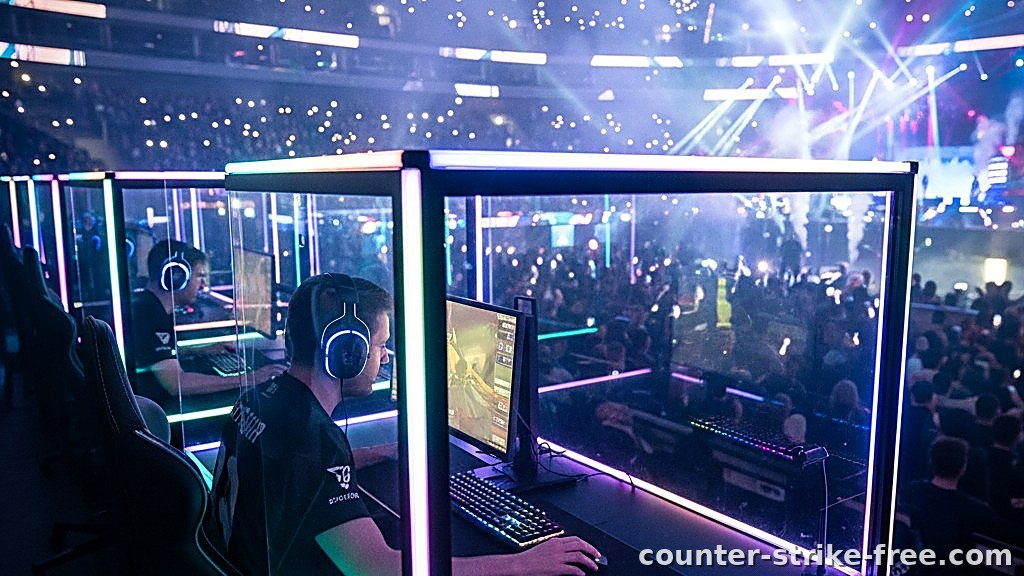
Schulze traced the German event’s rise to 2015, when ESL bet on arena Counter-Strike despite the game’s shaky comeback after a rough launch. The venue itself had been sitting unused for years before the company even existed. “It was a really big leap at that time,” he recalled. Since then, the summer tournament has turned into an annual pilgrimage for fans who treat it as a holiday. “It’s so great to see people come back, have this as a staple event every year,” Schulze added.
Four-day formats and the trade-off for fans
The Thursday-to-Sunday schedule used in Cologne is partly forced by the Major calendar, but Schulze sees it as a useful experiment. The extra day raises costs and demands more from attendees, so EFG won’t apply it everywhere. In Katowice, the traditional Friday-to-Sunday window lets fans catch all four quarter-finals even if they show up late, while Cologne’s Thursday start means Friday arrivals miss two of them. “There’s definitely some trade-offs,” Schulze noted.
- Visa hurdles remain a persistent obstacle for teams trying to compete in North America, with no simple solution in sight.
- EFG treats Cologne as a testing ground for fan experience ideas—side events, conferences, parties—and then adapts what works for other tournaments.
- Not every event aims to be the biggest; local narratives and regional flavour take priority over a universal template.
- IEM Kraków will shift to a four-day format next year, but most other events will stay at three days to keep them accessible.
Regional differentiation and the challenge of North America
Schulze emphasised that EFG’s calendar is built around giving each tournament its own identity. In Atlanta, the spotlight falls on North American teams, especially when VRS slots open doors for regional squads that rarely appear elsewhere. In Brazil, the crowd rallies behind local stars. In China, strong showings from Chinese teams are the ideal storyline. “Fans aren’t necessarily looking for a replica of Cologne every time,” he said. “If Cologne happened 10 times a year, it also wouldn’t be the same.”
The visa problem, however, continues to undercut that regional approach. While Schulze didn’t offer a quick fix, he acknowledged that the issue has historically limited the depth of North American events. Below is a breakdown of how EFG’s major events compare in format and regional emphasis.
| Event | Format | Regional Focus |
|---|---|---|
| IEM Cologne | 4 days (Thu–Sun) | Global; best team wins |
| IEM Katowice | 3 days (Fri–Sun) | Global; historic prestige |
| IEM Kraków | 4 days (starting 2027) | European/global |
| IEM Atlanta | 3 days | North American teams |
| IEM Brazil | 3 days | Local heroes |
| IEM China | 3 days | Chinese team performance |
Schulze’s overarching point is that EFG is willing to experiment—with day counts, side programming, and regional storylines—as long as the feedback loop keeps fans and players at the centre. “We really look at all the feedback the fans give us,” he said. “What did they like, what do they not like about the event.” That approach, he believes, will keep each tournament feeling distinct even as the portfolio expands.
Comments