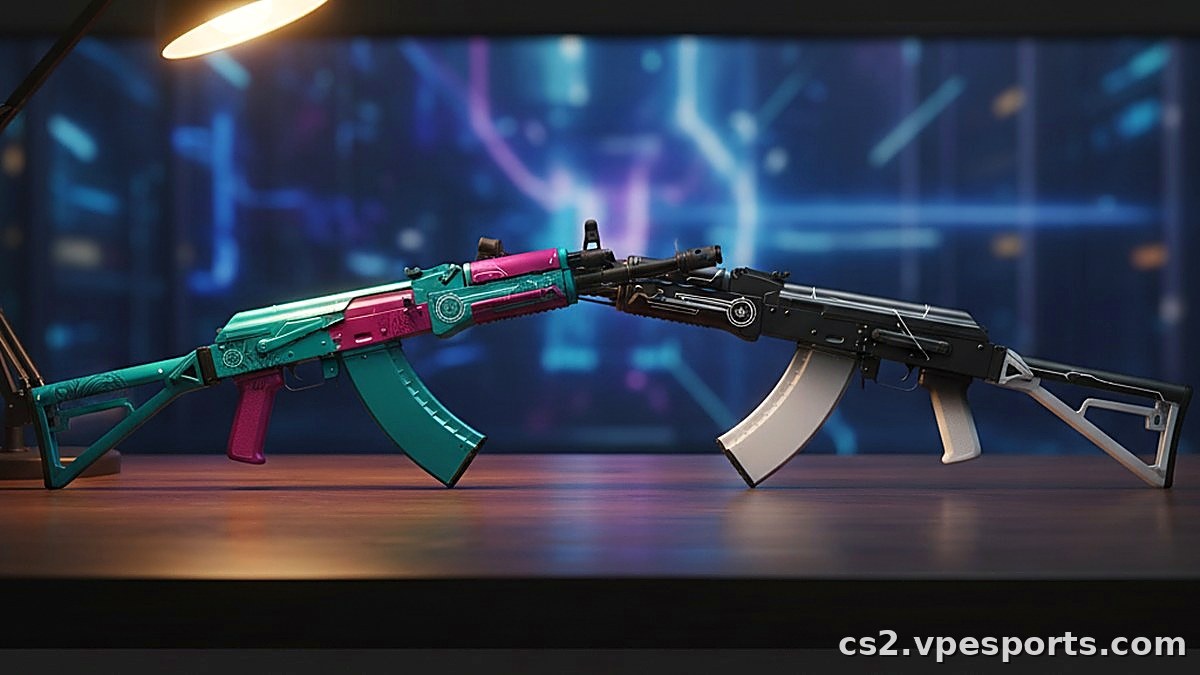
The debate over a new AK-47 skin in Counter-Strike 2 has escalated from simple preference to a full-blown discussion about Valve‘s role in shaping the final look of community-created cosmetics. After players noticed stark differences between the workshop submission and the in-game version, the skin’s creator stepped in with a revealing statement: the color changes and detail adjustments were entirely Valve’s doing, not his own. The admission has split the community, with some praising the mass-market logic and others mourning the loss of artistic identity.
In a direct comment on the discussion, the creator explained that he submitted multiple variations of the skin but that Valve independently altered the color scheme to a black-and-white gradient. He acknowledged the move was commercially smart—making the skin more compatible with popular stickers and easier to sell to a broad audience—even if it wasn’t his personal taste. This candid insight has turned a cosmetic critique into a referendum on how much editorial control Valve should wield over the skins that make it into the game.
Market Logic Versus Artistic Vision
The skin’s original workshop version featured a vibrant teal and magenta palette with intricate disc-like details on the magazine, which many players felt was fresher and more distinctive. Compared to the final black-and-white gradient with minimal accent, the original stood out as deliberate and unique. Fans argued that buying into the game’s ‘meta’ of safe, sticker-friendly skins discourages bold creativity from future designers.
On the other side, supporters of Valve’s changes point out that the final version fits seamlessly alongside existing collections like Printstream and Vulcan, and that a more neutral palette actually extends the skin’s lifespan in the market. The creator’s own admission that the change was ‘the smart move’ lends weight to the argument that commercial viability is not always a villain.
Community Split on Process and Outcome
Beyond aesthetics, a second layer of debate centers on the submission process itself. Some players are convinced that Valve purchased the rights to the skin and then altered it without further consultation, contrasting with Dota 2’s approach where Valve provides feedback before finalizing. This has raised questions about transparency and whether creators have any say after acceptance.
- Creator confirmed Valve changed color and details after submission without his input.
- Original version used teal/magenta colors and a visible audio disc motif; final version is black-white gradient.
- Community split: some prefer uniqueness, others value sticker compatibility and market appeal.
- Similar debates have occurred with other skins, but this creator’s direct comment adds rare transparency.
Implications for Future CS2 Skin Submissions
This controversy highlights a growing tension between the community workshop’s role as a creative outlet and Valve’s need to produce skins that sell well across all player segments. If Valve continues to smooth out distinct designs into safer templates, it may discourage risk-takers but also maintain a consistent visual standard for the game’s economy. The creator’s luck—getting a skin into the game at all—remains a significant achievement, but the process may need more clarity.
The debate also affects player perception of the skin market. As more players become aware of post-acquisition changes, trust in the system could erode. However, the skin’s eventual sales will serve as a real-world test: will the community vote with their wallets for the final version, or will they demand more author-driven designs in future collections?
| Feature | Original Workshop | Final In-Game |
|---|---|---|
| Color scheme | Teal and magenta | Black, white, gradient |
| Magazine design | Visible audio disc pattern | Minimal geometric lines |
| Sticker compatibility | Moderate (colors clash) | High (neutral background) |
| Community reaction | Praised for uniqueness | Polarizing, but market-friendly |
| Creator’s stance | Preferred original | Understands the change |
| Market potential | Niche appeal | Broad appeal |
Ultimately, the AK-47 skin controversy serves as a snapshot of CS2’s cosmetic ecosystem in 2026: a clash between art and commerce, with Valve firmly in the driver’s seat. As the community continues to debate, the skin will soon be available in-game, and its popularity will either validate Valve’s editorial choices or reignite calls for more creator control. Until then, the conversation itself has already changed how players see the skins in their inventory.


Comments