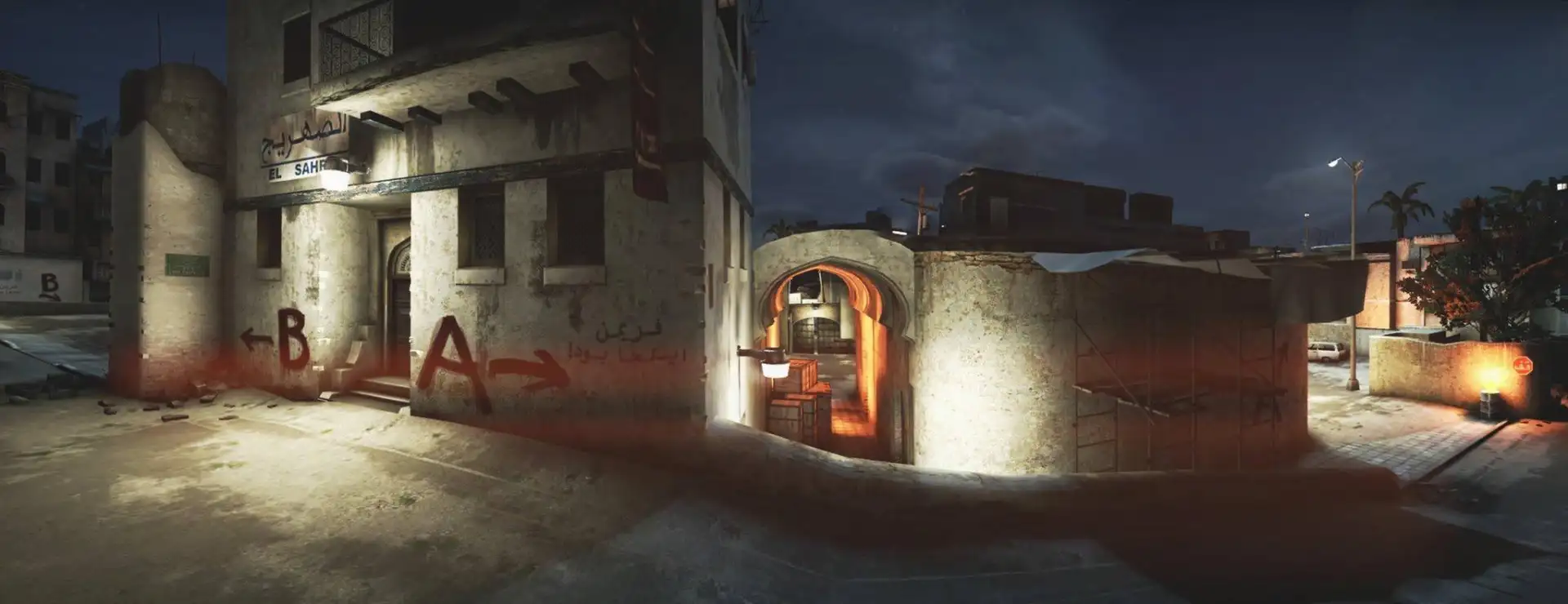
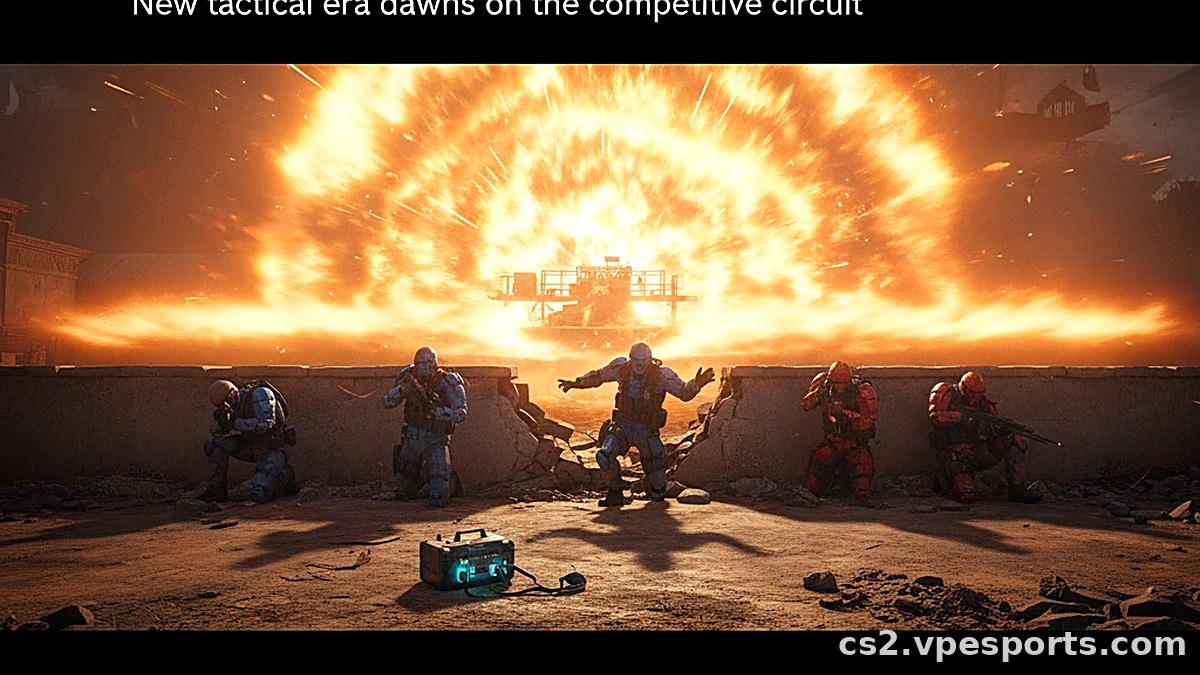
For over two decades, standing next to a ticking bomb in Counter-Strike meant certain death once it detonated. Season 5 of CS2 just threw that assumption out the window. Instead of an instantaneous kill zone, the explosion now behaves like a physical wave that propagates outward from the bomb site, bouncing around the map geometry. Anyone directly on the C4 is still erased, but players positioned at a distance behind solid cover can survive—and that changes how teams should think about those final seconds of a round.
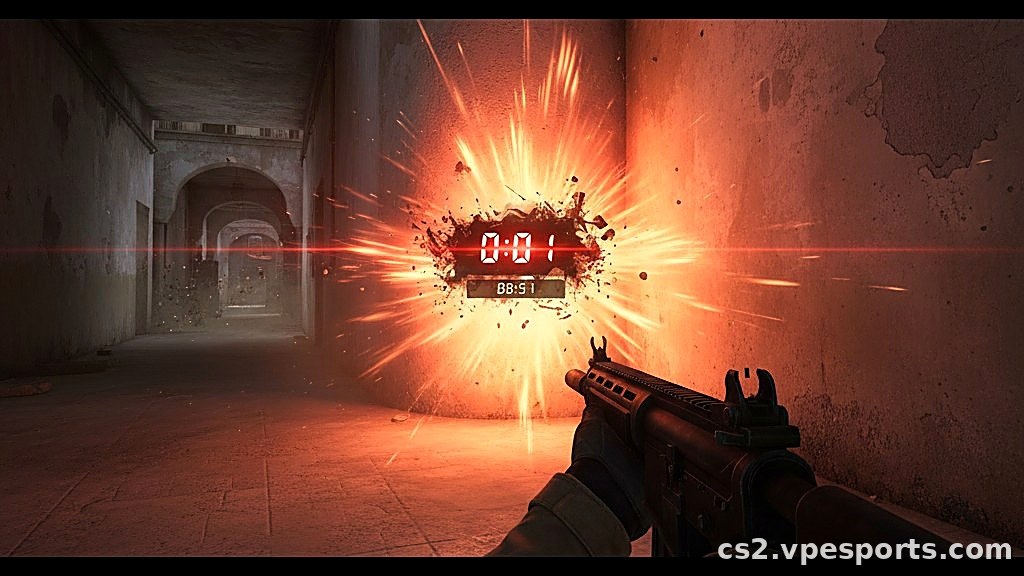
The new mechanic means a CT player holding heaven on Dust II who can’t defuse can now make a last-second scramble for a corner that blocks the wave, living through the blast instead of dying and dropping a $4,000 rifle into no-man’s land. That surviving player can then scoop up a fallen teammate’s M4 and armor before the freeze time ends, salvaging value from a lost round. Valve has confirmed the wave pattern is pre-baked for every defusal map in the pool, so professional teams will likely spend the next week mapping safe zones with the same precision they use for smoke lineups. The health bar already flashes during the low-timer warning to indicate whether your current spot is survivable—making trial-and-error documentation faster than it was during the smoke-era grind.
What the Wave Means for Post-Plant Protocols
Consistency is the key detail here. Because the wave behavior is authored per map rather than procedurally generated, the same corner that saves you today will save you next week. That repeatability turns wave survival into a teachable team mechanic, similar to knowing which boxes block AWP shots. On maps like Nuke, where bomb sites are stacked vertically and surrounded by metal grating, the wave likely behaves differently than on the wide-open bombsite B of Mirage. Teams that invest practice time into identifying and holding these wave-safe positions can give themselves a second life after a lost site retake.
Gabe Follower, a CS2 creator with access to the private test environment, posted a video showing the wave in motion during the Season 5 testing phase. The footage confirms the wave visually radiates from the bomb and degrades as it hits obstacles—no official gameplay clips were included in the patch notes themselves. One feature still walled off in that test environment: a command that lets players shoot grenades to detonate them mid-air. That mechanic remains unshipped and unconfirmed for any future update, but if it ever goes live, it would let players pop a frag over mid or ignite a molotov off a random stray bullet. In a pro match, that kind of on-the-fly grenade control would rewrite set-piece defaults, but for now it stays in Valve’s testing chamber.
Economic Ripple Effects on Buy Rounds
Losing a pistol round with full gear used to mean the winner collects everything from the bomb site and the loser stares at an empty inventory. With the wave mechanic, a T-side player who survives the detonation can walk out of a failed plant with a teammate’s Desert Eagle and full kevlar, skipping the eco round entirely. Professional rosters already treat economy management as a strict calculus of loss bonuses and force-buy thresholds—suddenly having a single surviving rifle available to the losing side pushes that math sideways. The designated survivor strategy carries its own risk: holding a wave-safe position means you aren’t watching crossfires or trading kills during the retake. Teams will have to decide whether the guaranteed equipment recovery justifies pulling a player off the active defense. In lower buy rounds, where losing a rifle can mean saving instead of force-buying, that choice could decide the next two rounds’ momentum.
Map Rotation Hits Pro Veto Strategies
- Cache is reinstated in the active duty pool, replacing Overpass—teams that prepared Overpass-specific setups now lose that map slot entirely.
- Five community maps enter the rotation, giving practice squads and ranked players fresh layouts to learn.
- Two new weapon collections and two new sticker collections arrive, adding cosmetic depth but no gameplay impact.
- CS:GO saw concurrent player records after receiving its own Steam page, drawing tens of thousands of players back to the older title while CS2 remains the main esports platform.
| Season 5 Change | Impact |
|---|---|
| Bomb explosion becomes wave | Survivors behind walls or around corners can live; equipment can be retrieved after detonation. |
| Overpass removed from active duty | Cache replaces it, forcing pro teams to rework veto plans and map preparation. |
| Five community maps added | Expanded casual pool; no effect on active duty rotation. |
| Two weapon collections released | Cosmetic additions with no balance changes. |
| Two sticker collections released | Cosmetic additions with no balance changes. |
| Grenade-shooting command in testing | Feature not shipped; no guarantee of release. |
| Cache returns to active duty | Map pool shifts; Overpass teams must adjust or replace their map slot. |
The map rotation change hits hardest for organizations that built their veto strategy around a strong Overpass performance, swapping in Cache—a map that was out of the competitive rotation long enough that its timings and angles require fresh scrim work. Meanwhile, the bomb wave mechanic adds a tactical layer that every pro team will have to account for before the next tournament cycle begins. The economic salvage potential alone makes it a priority study item, and the first match where a team loses a rifle save because a player misjudged the wave will be the moment everyone understands the new rulebook.


Comments