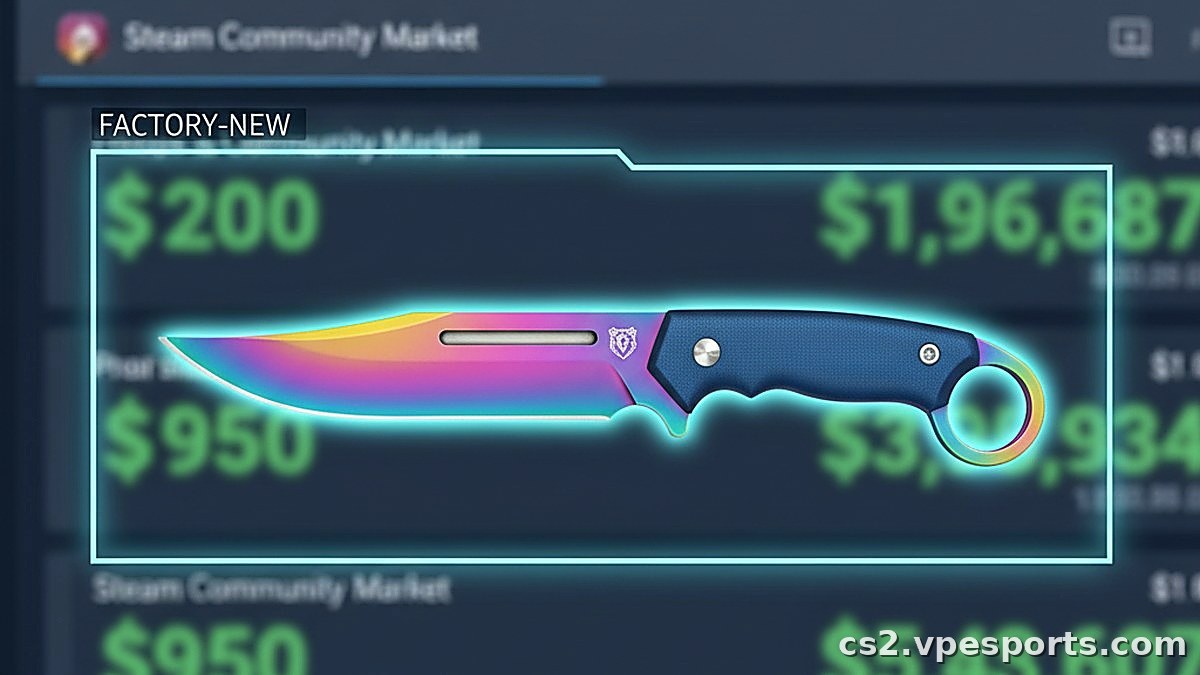
In Counter-Strike 2, a single knife skin can trade for more than a used Honda Civic. That’s not a glitch or a marketing stunt—it’s the natural result of an economy where Valve simply provides the container, and the community sets every price tag. Unlike every other major multiplayer shooter, there’s no storefront listing a fixed rate for that Doppler Karambit. Instead, its value is whatever someone is willing to pay on the open market, and that has created a billion-dollar ecosystem that behaves more like a stock exchange than a game menu.
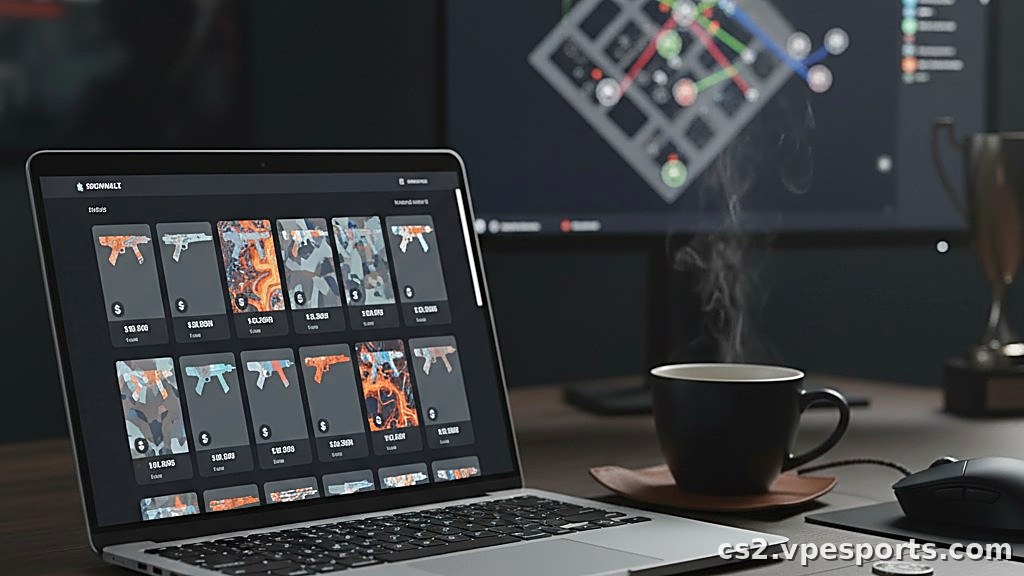
The origin of every skin is the same: a case opening. When you crack a case, you pull from a predetermined rarity pool, and the odds are brutally stacked. Knives and gloves sit at the top with a 0.26% chance, meaning you can expect to open nearly 400 cases to see one. That built-in scarcity is the first lever. But Valve never slaps a dollar sign on the result—they hand that power to the players. The Steam Community Market acts as the primary exchange, where supply and demand collide in real time. Third-party sites like Skinport and Buff163 accelerate the process by converting skins into cash for fees as low as 2%, bypassing Valve’s 30% cut. This liquidity turns a virtual item into a tradeable asset you can actually withdraw, which is the core reason CS2 skins carry real-world prices that dwarf cosmetics in other games.
This isn’t just about rarity tiers. Every skin carries additional variables that create micro-economies within a single design. Float values—Factory New, Minimal Wear, Field-Tested, Well-Worn, Battle-Scarred—dramatically shift pricing. A Factory New M4A4 Howl can cost ten times more than its Battle-Scarred version. Then there are pattern templates: the slight variations in how a finish renders on the weapon model. Some patterns, like the full blue gem on a Case Hardened AK-47, are considered far more desirable. StatTrak versions track kills and Souvenir skins come with tournament stickers, adding further layers of scarcity and collector value.
The speculative nature is what separates this market from a standard store. A skin worth $5 today can spike to $500 overnight if a popular pro uses it in a BLAST Premier final or if the case containing it gets removed from the drop pool. Players and collectors treat inventories like portfolios, buying low on patterns they believe will trend. This behavior is reinforced by the ability to cash out—something you can’t do with a Valorant skin bundle, which is locked to your account and costs a flat $80 regardless of demand.
From Case Odds to Price Tags
Valve controls the supply line through drop rates, but the final price is written by the community on a daily basis. The table below breaks down the typical rarity distribution and the resulting price brackets you’ll find on the market today.
| Skin Tier | Approx. Drop Rate | Common Price Range | Example |
|---|---|---|---|
| Common Blue | ~79.92% | $0.03 – $0.50 | MAG-7 | Silver |
| Purple | ~15.98% | $0.50 – $5 | AK-47 | Blue Laminate |
| Pink | ~3.19% | $2 – $20 | M4A4 | Howl |
| Red | ~0.64% | $20 – $200 | AWP | Lightning Strike |
| Knife / Glove | ~0.26% | $100 – $10,000+ | Karambit | Doppler |
| Ultra-rare Souvenir | ~0.005% | $10,000 – $1,000,000+ | Souvenir AWP | Dragon Lore |
The numbers speak for themselves. A Souvenir Dragon Lore AWP, with its 0.005% drop chance and a clean sticker placement from a major tournament, can trade for over $100,000—more than most physical luxury goods. Professional players often carry inventories worth six figures, and some organizations have started integrating skin collections into sponsorship arrangements. The surrounding ecosystem of traders, streamers, and third-party gambling platforms is all built on this fundamental principle: the developer provides the chassis, but the player-driven market sets the value. No price controls, no developer intervention—just supply and demand determined by tens of thousands of trades every single day.

Comments